

Good Day to all! The Charlotte County Historical Society’s annual Hibiscus Festival is coming up May 1, 2, and 3 at Gilchrist Park. Visit thehibiscusfestival.com for more details.
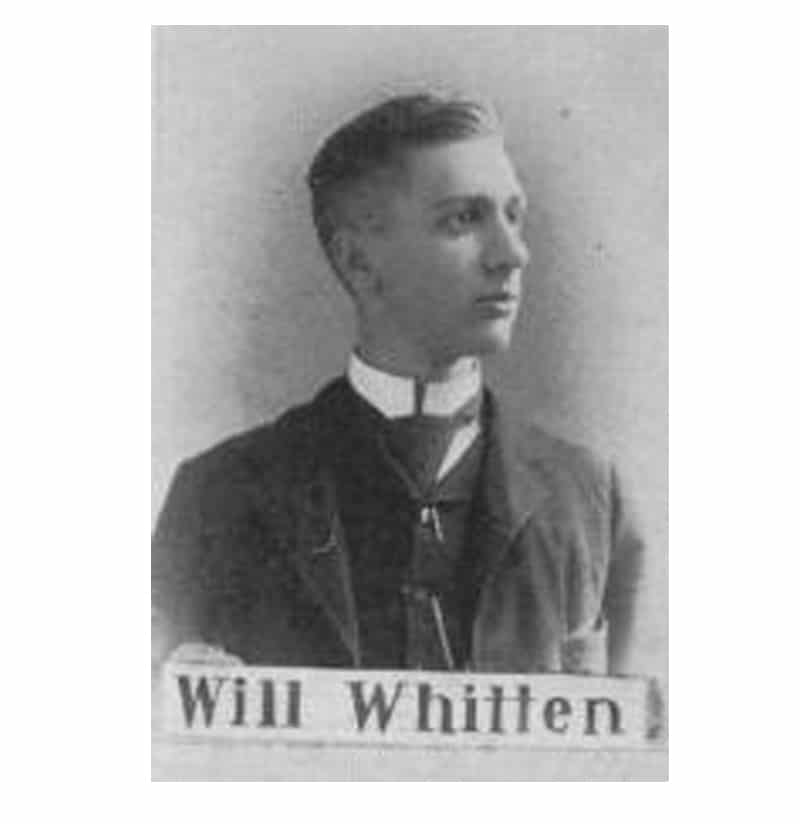
Did you know a civil engineer from Indiana played a significant role in Punta Gorda’s and Charlotte County’s early history? William Monson Whitten had served South Bend for 24 years as its city engineer when he boarded the train in 1899, bound for Punta Gorda. Seriously ill and twice widowed, he’d made certain his third wife and seven children were well provided for before heading to Florida hoping to recuperate. Soon after arriving, he purchased a pineapple farm (pinery) east of Punta Gorda in the Solana area. That turned out to be just the beginning of Whitten’s “investments” here.
Within a couple of years, his health improved, William literally gave his successful pinery to Reverend Smith Hardin, bachelor minister of Punta Gorda’s Methodist church, who he’d befriended, and returned to Indiana. He expected that one day Reverend Hardin would marry and build a home on the property. Once back in Indiana, it was obvious his wife Hattie, a sister of his second wife who also suffered from ill health, had taken a turn for the worse. Greatly alarmed, William determined to move his family south, hoping the climate would also improve Hattie’s health.
With his family in tow, Whitten returned to Punta Gorda in early 1902 and reluctantly, at Reverend Hardin’s insistence, accepted return of his pinery. Unfortunately, Hattie’s condition worsened and by May she succumbed to her illness. William, who did not marry again, then applied himself to expanding his pineapple operation, which evidently brought his engineering and management skills to light. He had developed them working in his father’s successful South Bend carriage factory.
Soon he was a well-known and respected businessman, serving three terms as a DeSoto County Commissioner. Remember, at the time, Charlotte County had yet to be created. Under his supervision, the first decent roads were built in Punta Gorda and impetus began building to construct a bridge connecting Punta Gorda and the Charlotte Harbor community.
Although construction began in 1916, the bridge still sat unfinished in 1920 due to material shortages during the “War to end all wars”, World War I, and subsequent diversion of funds by a majority of commissioners to build the new DeSoto County courthouse. Frustrated by the delay and the commission’s unwillingness to appropriate funds, Whitten advanced considerable personal funds to “jump start” completion, overseeing the project until the bridge opened July 4, 1921. The end result was not only a new bridge, unfortunately obsolete at completion, but finally, creation of Charlotte County from a portion of DeSoto County just a few months earlier.
William Whitten continued to serve Charlotte County as a member of its first county commission and oversaw construction of Punta Gorda’s first paved streets. He passed away in October 1927, 84 years old, and although descendants still reside in Charlotte County today, in keeping with his wishes, his body was returned to South Bend for interment. William Whitten is the Great, Great Grandfather of Paul Polk, Charlotte County’s Property Appraiser.
Visit Charlotte County online library resources to view photographs of William Whitten. Select “Library Catalog”, click on “Physical Items”, then “Archive Search”. Enter the subject of your search on the “Search” line.
“Did You Know” appears, typically, every other Wednesday, courtesy of this newspaper and the Charlotte County Historical Society. The Society’s mission is to help promote and preserve Charlotte County’s rich history. We are also always looking for volunteers and interested individuals to serve as board members. If you believe our area’s history is as important as we do, please visit Charlotte County Historical Society on-line at https://cchistoricalsociety.com/, or call 941- 769-1270 for more information
Check out History Services’ yearlong project, “Telling Your Stories: History in the Parks”. It began in January 2021 with placement of the first interpretive sign “Charlotte Harbor Spa” at South County Regional Park. The last was dedicated December 15, 2021 at Centennial Park featuring Florida postcards. All dedicated signs can be viewed at online library resources. Select “Programs and Services”, then “History Services” and “Virtual Programs”.
Visit the same site to access recently released oral histories featuring 40 local folks. Select “History Services” and scroll down, or phone 941-629-7278, to find out what history related programs and videos are available.
April 15 column
