

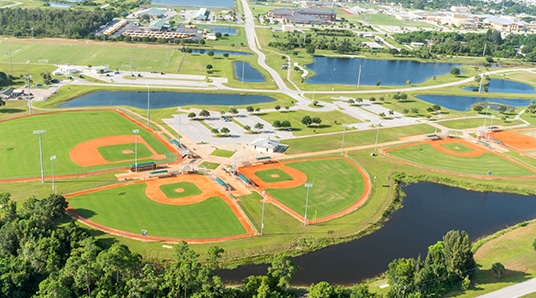
Good Day to all! The Charlotte County Historical Society’s annual Florida Frontier Days Festival is coming up next Friday and Saturday, February 27 and 28, 9:30 till 2 each day at a new location. We will be at South County Regional Park. Use the Carmalita Street entrance next to the county’s school bus yard. Free games and “hands-on” activities. Admission is just $5.00, children 3 and under, no charge.
Did you know Punta Gorda’s first school for African-American children was established by a young man from Live Oak, Florida? Benjamin Joshua Baker, born in the county seat of north central Florida’s Suwannee County in 1872, was taught to read and write by his parents. Not necessarily a surprise until one learns they were former slaves who had also mastered those skills, an exception to the rule in those times when there was great concern educated slaves would be more inclined to seek freedom.
Young Benjamin didn’t begin his formal education though until the early 1880’s when a school for Live Oak’s African-American children was finally opened. He did well and by 19 had passed the state teaching exam, the only requirement at the time for anyone wishing to become a teacher. The next dozen years were spent teaching in Suwannee County’s small, segregated schools.
In 1886, a few years before Baker obtained his teaching certificate and almost 300 miles to the southwest, Albert Gilchrist and his surveying crew completed laying out Florida Southern Railway’s route from Bartow Junction to Trabue (Punta Gorda). Gilchrist and several of his workers then decided to make the new town their home. One of them was Dan Smith, who soon became a leader in Punta Gorda’s African-American community.
Gilchrist, who would become Florida’s governor, also served in the state House of Representatives from 1893 until 1905. In 1903, he appointed Smith to Desoto County’s Board of Education. Remember, Charlotte County was not created until April 1921.
Mr. Smith then traveled to New Orleans for an educator’s conference with the express purpose of hiring a teacher. There he met Benjamin Baker, then 31, and convinced him to come to Punta Gorda. That same year, Baker arrived to teach in the city’s first “colored school”, a two-room, wood frame building on Marion Avenue at the foot of Cooper Street, near the bay.
With enrollment expanding rapidly, it wasn’t long before a new four-room school was constructed at the corner of Mary Street and Showalter Avenue, about where New Operation Cooper Street’s tennis courts are today. The new school was commonly known as Baker’s Academy.
Dr. Baker lived just a few blocks away, in a small cottage on Nesbit Street just north of Charlotte Avenue. Married twice, he lost both wives and never had children of his own. A stern, but beloved teacher, he retired in 1940 due to his health, after almost 50 years as an educator. Interestingly, he was the first to receive a pension under the Florida Teacher’s Retirement Act, which became effective in 1939.
Apparently, he was also very diplomatic. It’s said that although a religious man, he never formally joined either African-American church of the time, alternating attendance between St. Mark Missionary Baptist and Bethel A. M. E. churches so as not to show partiality.
Benjamin Baker passed away in 1942 while a new Baker Academy was under construction on East Charlotte Avenue near his home. The school remained segregated, with “senior high” aged students required to attend Dunbar High School in Fort Myers until 1964, when Charlotte County schools were some of the first in Florida to voluntarily integrate. Then it became Baker Elementary.
The current school, rebuilt after Hurricane Charley, and renamed the Baker Center, is home to Charlotte County’s early childhood education programs. Dr. Baker is interred at Lieutenant Carl Bailey Cemetery and is one of several African-American citizens prominent in Punta Gorda’s history depicted in a mural at the Baker Center. The Punta Gorda Historic Mural Society is also working on a Baker Academy historical marker to be placed near the Cooper Street Recreation Center.
Visit Charlotte County online library resources to view a photograph of Dr. Baker. Select “Library Catalog”, click on “Physical Items”, then “Archive Search”. Enter the subject of your search on the “Search” line.
“Did You Know” appears, typically, every other Wednesday, courtesy of this newspaper and the Charlotte County Historical Society. The Society’s mission is to help promote and preserve Charlotte County’s rich history. We are also always looking for volunteers and interested individuals to serve as board members. If you believe our area’s history is as important as we do, please visit Charlotte County Historical Society on-line at https://cchistoricalsociety.com/, or call 941- 769-1270 for more information
Check out History Services’ yearlong project, “Telling Your Stories: History in the Parks”. It began in January 2021 with placement of the first interpretive sign “Charlotte Harbor Spa” at South County Regional Park. The last was dedicated December 15, 2021 at Centennial Park featuring Florida postcards. All dedicated signs can be viewed at online library resources. Select “Programs and Services”, then “History Services” and “Virtual Programs”.
Visit the same site to access recently released oral histories featuring 40 local folks. Select “History Services” and scroll down, or phone 941-629-7278, to find out what history related programs and videos are available.
February 18 column
